
1. New forecast shows the physician shortage is getting worse, especially for rural healthcare
HRSA's latest projection puts the country short 141,160 physicians by 2038, but that shortage is not evenly distributed. Rural areas have about 42% of the physicians they need while metro areas have 95%.
Two things this year made the rural picture harder:
- In the 2026 residency match, the match rate for internationally trained physicians who need visa sponsorship dropped to a five-year low, which NRMP linked to changes in federal immigration policy.
- On July 1, new caps on federal medical-school loans took effect, which the AAMC expects to hit rural and low-income students hardest.
Those two groups, international physicians and students who grew up in rural areas, are a big part of who ends up practicing in rural communities.
What you can do about it: A gap this structural will not close by filling one role at a time. Map where your coverage is thinnest now and build flexibility into your workforce through strategic locum tenens support ahead of time.
2. Licensing across state lines sped up, but not for every role
Source: IMLCC.com
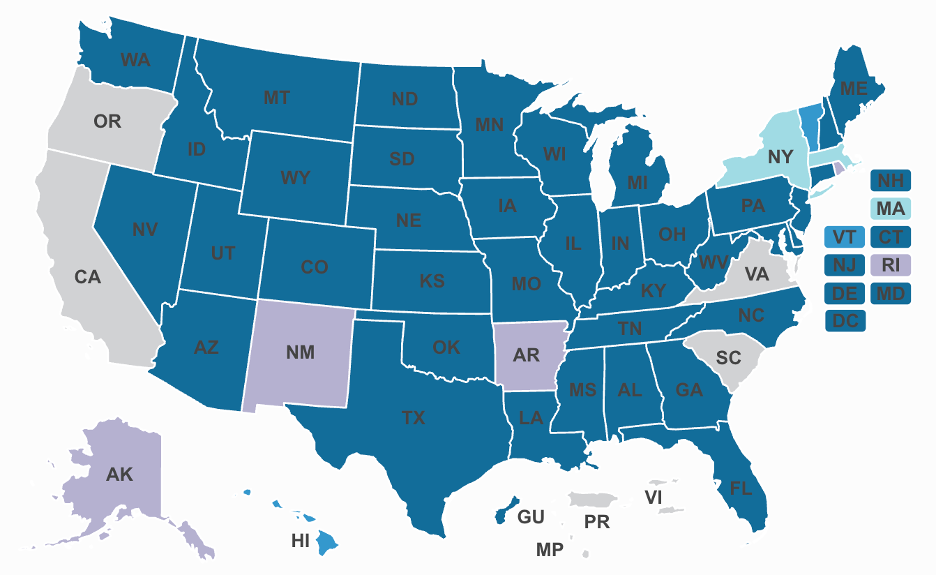
Physicians and nurses can move between states more easily than ever. The Interstate Medical Licensure Compact brought in Alaska as its 44th member this past June, and the Nurse Licensure Compact now covers 41 states plus a few other jurisdictions. Licensing can be the slowest step in getting a clinician to work, so this has implications for time off coverage.
Physician associates are still waiting. Their compact has passed in about 19 states but is not running yet, and multistate practice is not expected until 2027. Until that time, a PA needs a separate license for every state in which they practice.
What you can do about it: Sort your open roles by how fast they can realistically move. Sourcing from a single staffing partner with a streamlined licensing and credentialing process will help mitigate the slowdown.
3. The floodgates are open for AI clinical tools, but accountability rests on your shoulders

On January 6, the FDA changed its guidance on clinical decision support software so that more AI tools can reach clinics without a device review first. The goal was to speed up innovation, but what that means for healthcare organizations is that more responsibility falls on facilities since these tools will land in your clinicians' workflow with less federal review behind them.
What you can do about it: As more software enters care delivery with less federal vetting, the quality of the output will need to be monitored by those most equipped to do so.
4. Technology is bringing specialty care to places that could not get it before

The same pressures squeezing the workforce are also widening where specialty care can reach. As remote technology gets better, a facility can tap subspecialty expertise without that clinician being onsite. This matters most in the rural and short-staffed places feeling the shortage more acutely than metro settings.
One example is our remote radiology workstations for women's imaging, which let breast-imaging subspecialists read studies from anywhere and bring that coverage to sites that would otherwise not be able to offer that care.
What you can do about it: Evaluate which of your service lines could functionally be supported remotely, so that your coverage options are not capped by who lives within driving distance of the facility.
The bottom line heading into Q4 2026
The ongoing clinician shortage is structural, and licensing changes play out over years. What separates the facilities that stay ahead of market disruptors is simple enough: they plan for coverage instead of reacting to sudden holes in the schedule. Partnering with LocumTenens.com keeps your care moving forward even when workforces fluctuate and industry dynamics feel like stiff headwinds.