
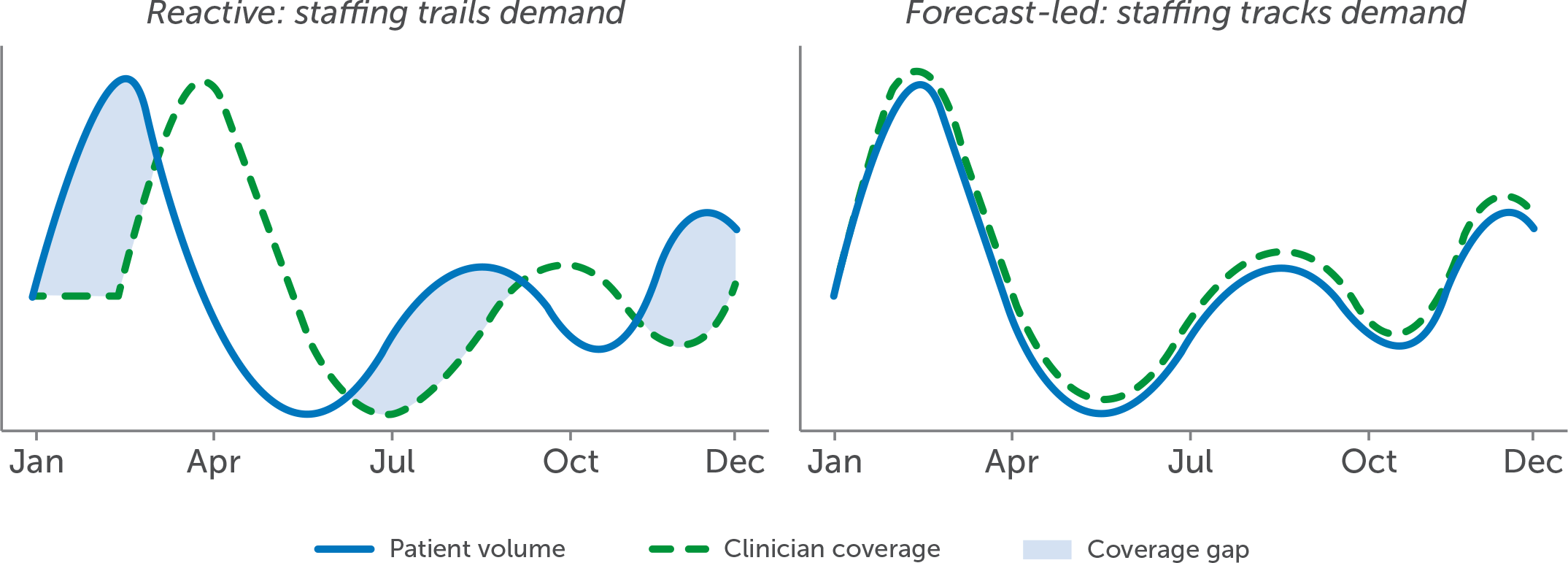
Illustrative: Reactive staffing trails behind patient volume and leaves coverage gaps. Predictive staffing models ideally staff up and down alongside it.
Even before the AI revolution, hospitals produced an estimated 50 petabytes of data a year, with 97% of it going unused according to the World Economic Forum. That total includes clinical notes, lab results and imaging. It also includes operational and financial data, which is where the value lives for healthcare facilities seeking to eliminate coverage gaps.
Most organizations aren't sifting through the numbers to find those meaningful signals.
If volume spikes, the schedule breaks, and leaders start searching for coverage at the same moment everyone else is. With the AAMC projecting a shortage of up to 86,000 physicians by 2036, that scramble won't get easier.
Forecasting doesn't necessarily require a data science team, AI analysis or other advanced technologies. You can start by understanding which data matters, getting it into one place and working with a partner who can act on what it tells you.
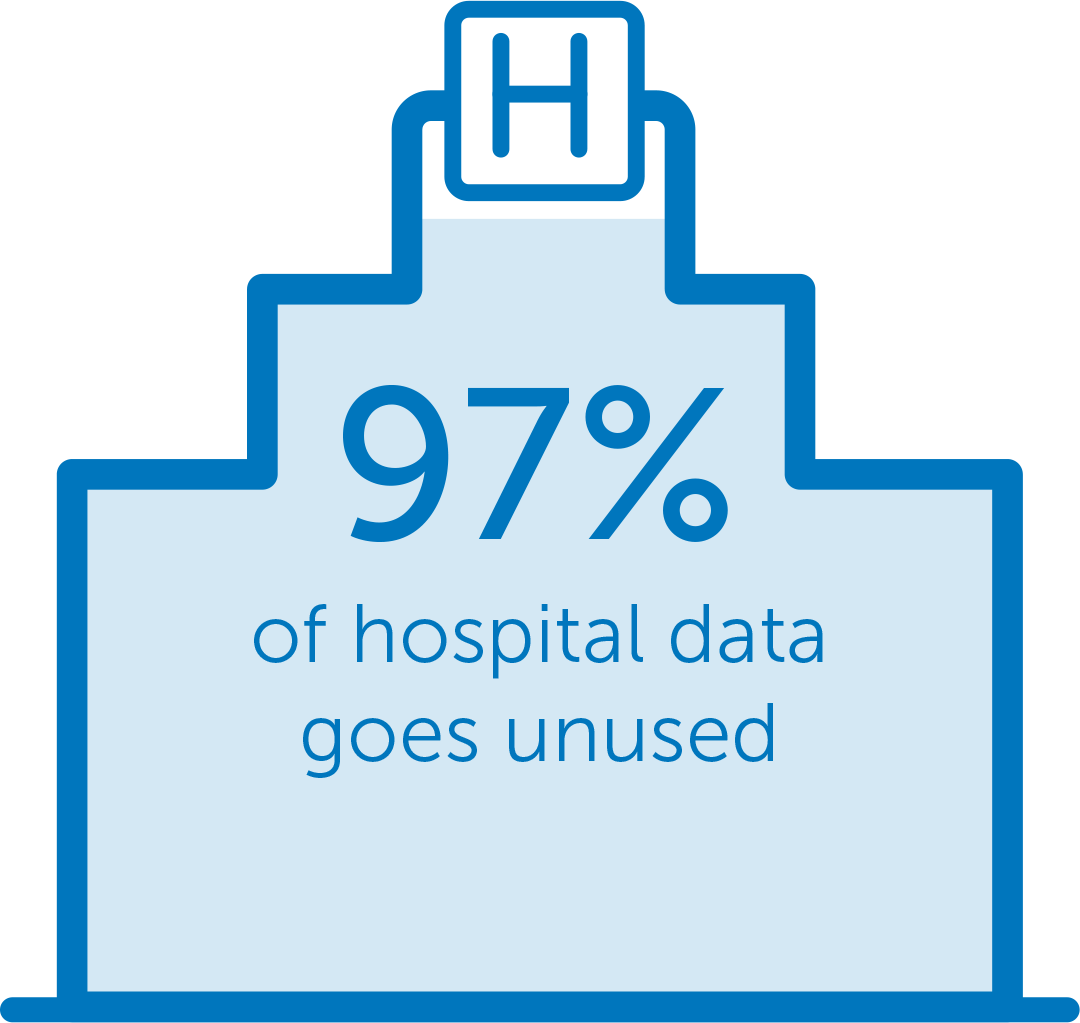
Source: World Economic Forum, 2019.
The patterns are already in your records
Researchers at an urban teaching hospital in the Northeast U.S. built a model to predict daily emergency department arrivals using calendar variables and a 28-day rolling average of the hospital's own arrival counts. Mondays brought about 23% more arrivals than Sundays, and holidays about 14% fewer. Adding local weather data improved the predictions further.
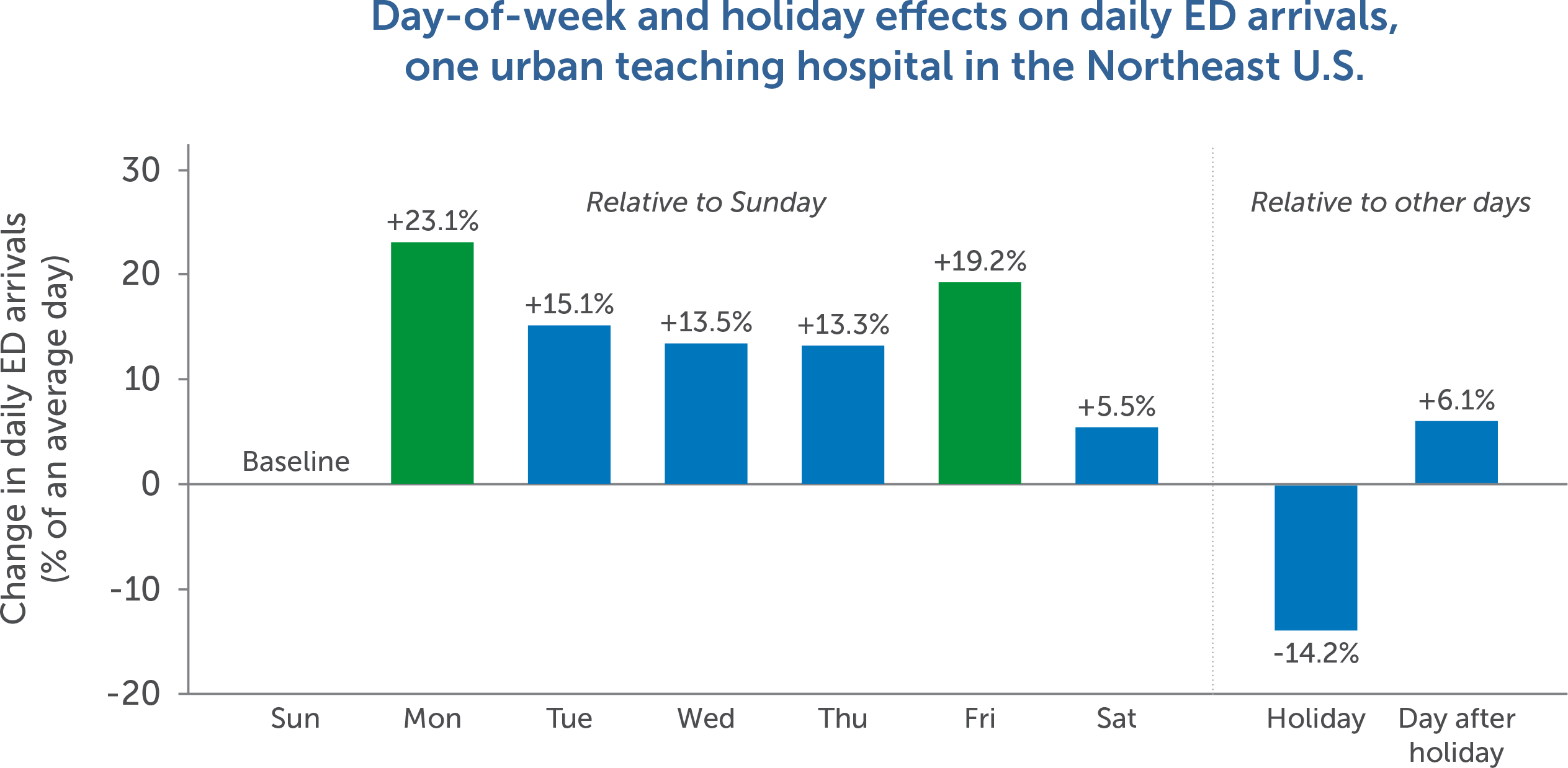
Change in daily ED arrivals by day of week, relative to Sunday, and around holidays, relative to other days. Source: Burlotos et al., Internal and Emergency Medicine, 2025, Table 2.
The model placed the hospital's patient arrival records against publicly available weather data from NOAA. Look for similar raw material that you maintain in your own systems:
- Two or more years of daily census, ED arrivals and admissions
- OR block schedules and procedure volume by service line
- Approved PTO and planned leaves
- Credential and license expiration dates
- Local calendars, including school terms, tourism seasons and major events
Separate the predictable from the unexpected
Some surges arrive on schedule. The CDC reports that flu activity typically peaks between December and February. Across four decades of seasons, February was the most common month containing the high point. Additionally, summer vacations and holiday weeks follow their own recurring patterns reinforced year after year. None of them need to catch a staffing plan off guard.
Unexpected surges usually send early signals. Watch for rising ED arrivals, climbing overtime, a cluster of PTO requests or a clinician hinting at a departure. You won't predict every event, but you can cut down the surprises and catch the rest sooner.
Turn the forecast into a coverage plan
A forecast is a good starting place. What makes it impact your ROI is taking action on it.
Bringing in a locum tenens clinician means finding the right match, confirming licensure and completing your facility's credentialing. Working back from a projected peak tells you when each of those steps needs to start.
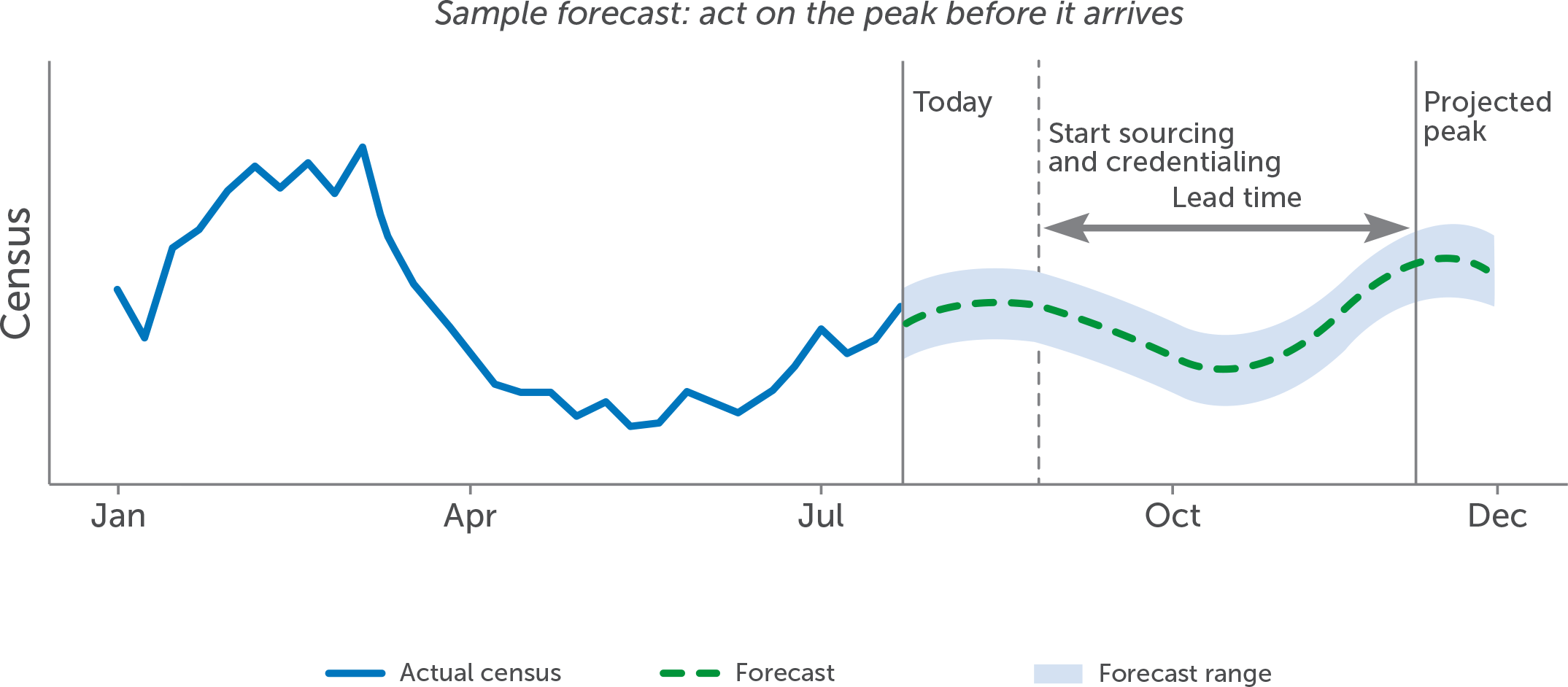
Illustrative: A sample forecast puts the start of sourcing and credentialing well ahead of the projected peak, and enables facilities to plan for best and worst case scenarios.
But can the data be trusted to be accurate and useful? An important part of data collection is also tracking the accuracy of the forecast itself. This focus on continuous improvement ensures increasing accuracy and better performance as time goes on.
Put the data in one place
Forecasting falls apart when the inputs live in separate spreadsheets. Kimedics, a LocumTenens.com company, gives healthcare organizations shared visibility into onboarding, schedules and spend, backed by analytics across staffing operations. When coverage, availability and credential status sit side by side, gaps become visible while there's still time to fill them.
Is your organization positioned to act on your data?
Answer these five questions to gauge your facility's readiness:
- Can you pull at least two years of volume data by service line?
- Do you know your peak weeks and which specialties feel the strain first?
- Do you know how long it takes to credential a new clinician at your facility?
- Do your scheduling, PTO and credentialing data live in one system?
- Does your staffing partner see your forecast every quarter, not only when a gap opens?
Each "no" marks a place to investigate and make changes to your data collection and operations. A proactive staffing partner like LocumTenens.com will come to you with a plan for each.
In addition to what you are already tracking, our team brings in more data points to monitor. This adds valuable nuance to your operational perspective, anonymized and compliant with all regulatory requirements, and informed by years of experience with a broad diversity of specialties and facilities.
Get ahead of the next surge
The data you need to stay ahead of patient volume already exists; the challenge is in collecting it, reading it and acting on it early. Talk with our consultative services team about building a coverage plan around the data you already have, what you can get and what you can start acting on.